
Colonial Wars |
American Wars |
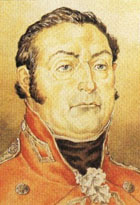
Major General Henry Proctor
Henry Proctor was born 1763 in Ireland and died on 31 October 1822 in Bath, England. He was a British Army officer during the War of 1812
 |
| NAME |
| Proctor, Henry |
| BORN |
| 1763 Ireland |
| DIED |
| 31 October 1822 Bath, England |
| ARMY |
| British |
Procter came to Canada in 1802 along with another British officer named Isaac Brock. Unlike Brock, who became a hero after his death at Queenston Heights, Procter survived the War of 1812. His reputation and promising military career did not.
Despite enjoying considerable success at the beginning of the war, by 1815 Procter was publicly disgraced by his own country and demonized by American popular opinion. Procter was born in Ireland in 1763. The son of an army surgeon, he initially bought his commission in the British army. Before the outbreak of the War of 1812, Procter earned praise for turning the 41st Regiment into an efficient battle-ready force. His hard work was rewarded by consistent promotion. Procter played an important role in preparing for Brock’s success in the surrender of Fort Detroit in August of 1812. He took command of the British Right Division after Brock’s death, but could not quite fill the hero’s shoes. Procter was brave, but also secretive and reserved. In January of 1813, an American force under James Winchester marched north to retake Detroit. Procter’s army met the Americans in a bloody battle at Frenchtown. After the engagement, Procter left the American wounded behind and withdrew towards the safety of Amherstburg. Enraged native warriors soon killed between 30 and 60 of the American prisoners. U.S. newspapers dubbed the incident the “River Raisin Massacre” and portrayed Procter as a monster. The resulting public outcry helped provide the Americans with the momentum which resulted in the destruction of Procter’s army at Moraviantown. When the Kentucky volunteers charged the British lines at Moraviantown they cried, “Remember the Raisin.” Procter’s position on the Detroit frontier was left extremely exposed by the US naval victory at Put-in-Bay on Lake Erie in September of 1813. Lacking supplies and support from the British administration, Procter had stripped all of Fort Malden’s cannon to outfit the British squadron.
He had also been forced to use one-third of his soldiers to crew the navy ships. The naval victory left him short of fighting men and with a defenseless fort. Perhaps more importantly, the American domination of Lake Erie cut his supply line and left him open to attack from two sides. Procter decided to face the Americans at a more protected position up the valley of the Thames River. His subsequent retreat from Amherstburg was a disaster, and the British-First Nations force was decimated by the Americans in Moraviantown on October 5, 1813.
Procter was a competent officer in peacetime but was unable to manage the extremely difficult withdrawal from Amherstburg. A court martial later found Procter guilty of being "deficient in energy and judgment" during the campaign. He was suspended from rank and pay, although this sentence was later reduced to public reprimand. Procter was suspended for 6 months without pay. He left Canada in 1815, his military career in ruins. He died at the age of 59 in 1822.
Procter was not without supporters, even in the wake of his defeat at Moraviantown. In 1815, the Montreal Herald published several anonymous letters defending Proctor. These “Letters of Veritas” criticized Governor Gen. Sir George Prevost’s lack of support for the war in the Northwest and his subsequent harsh treatment of Procter.
Procter's last name is also spelled "Proctor" in many documents and books, though scholars generally prefer "Procter".
Opinions on Procter are divided. Some scholars dismiss him as incompetent, while others point out that he was denied adequate resources by his superiors and was unfairly held responsible for the conduct of his Indian allies (except where accompanied by Tecumseh himself). Procter's conduct at the Battle of the Thames bears a strong correlation with signs of (then undiagnosable) battle fatigue, after a long campaign with insufficient supplies.
 are available from Amazon.com